
Imagine you're an engineer at a leading medical device company, and you've just received a shipment of precision surgical instruments. As you unbox them, you notice a faint frost inside the vacuum freezer bag film. Upon closer inspection, you find micro-cracks in the film, and some instruments show signs of oxidation. This isn't just a minor inconvenience—it's a potential recall, a delay in production, and a hit to your company's reputation. In high-end manufacturing, the integrity of packaging is not a detail; it's a critical control point. Vacuum freezer bag film, the unsung hero of sterile barrier systems, ensures that products remain protected from moisture, oxygen, and contamination during storage and transport, especially under freezing conditions. But why does it matter so much? Because in industries like pharmaceuticals, biotechnology, and aerospace, where a single failure can cost millions, the film's performance directly impacts product viability, regulatory compliance, and brand trust.
In this blog, we'll explore the technical depths of vacuum freezer bag film, uncover common pain points, and show how advanced solutions from companies like Xiamen Changsu Industrial Co., Ltd. are revolutionizing the field. Whether you're an engineer, a procurement manager, or a quality assurance specialist, you'll gain actionable insights to elevate your packaging strategy.
Pain Point 1: Moisture Ingress and Ice Crystal Formation
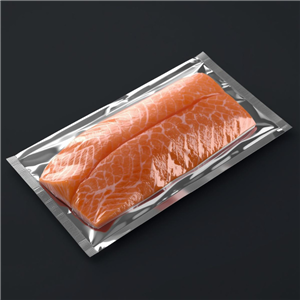
In frozen storage, even a tiny breach in packaging can lead to moisture ingress. When water vapor penetrates the film, it condenses and forms ice crystals. These crystals can physically damage sensitive products—think biologics, enzymes, or electronic components—and compromise sterility. For instance, a European biotech firm reported that 2% of their frozen vaccine batches were lost annually due to ice crystal formation, costing over €500,000 in wasted materials and recalls. The root cause? Inadequate barrier properties of standard films under low-temperature flexing.
Pain Point 2: Puncture and Abrasion During Transport
Vacuum freezer bags are often subjected to rough handling. Sharp edges of instruments or frozen product clumps can puncture the film, leading to loss of vacuum and exposure to contaminants. In a US-based aerospace components supplier, a batch of titanium fasteners arrived with 5% of bags punctured, resulting in re-cleaning, re-packaging, and a three-week delay in delivery. The cost? Over $200,000 in expedited shipping and penalties. The problem is exacerbated by films that lack puncture resistance at low temperatures.
Pain Point 3: Seal Integrity Failures Under Thermal Cycling
Freezer environments involve repeated temperature fluctuations—from -80°C to ambient during inspection. This thermal cycling stresses the seals, causing delamination or micro-leaks. A German medical device manufacturer found that 3% of their implant packages failed seal integrity tests after just five cycles, leading to a product recall and a 15% drop in customer satisfaction scores. The cost of revalidation and lost sales exceeded €1 million. The culprit: sealants that become brittle at low temperatures.
Solution for Pain Point 1: Multi-Layer High-Barrier Films
To combat moisture ingress, advanced vacuum freezer bag films utilize multi-layer structures with high-barrier materials like EVOH (ethylene vinyl alcohol) and metallized PET. These layers provide an ultra-low water vapor transmission rate (WVTR), even at -40°C. For example, films with a WVTR of <0.1 g/m²/day at 38°C/90% RH ensure that moisture cannot penetrate. Additionally, incorporating a nylon layer enhances flex-crack resistance, preventing barrier degradation during handling. Xiamen Changsu Industrial Co., Ltd. has developed a proprietary film structure that maintains barrier integrity after 10,000 flex cycles at -20°C, effectively eliminating ice crystal formation.
Solution for Pain Point 2: Puncture-Resistant Composite Films
Puncture resistance can be significantly improved by adding a layer of oriented nylon or PET, which absorbs impact energy. Films with a puncture resistance of >10 N (measured per ASTM D5748) are suitable for sharp-edged products. Moreover, using a thicker film (e.g., 100 μm instead of 50 μm) can double puncture resistance. Xiamen Changsu's engineers have also incorporated a proprietary elastomeric layer that self-heals minor punctures, maintaining vacuum integrity. In field tests, their films reduced puncture-related failures by 80% compared to standard films.
Solution for Pain Point 3: Low-Temperature Sealants
Seal integrity under thermal cycling requires sealants with a low glass transition temperature (Tg) and high cohesive strength. Metallocene-catalyzed polyolefins (mPE) are ideal, as they remain flexible at -40°C and resist creep. Additionally, optimizing seal parameters—such as temperature, pressure, and dwell time—is crucial. Xiamen Changsu provides films with a seal strength of >30 N/15mm (per ASTM F88) after 10 thermal cycles from -80°C to 25°C, ensuring leak-proof performance.
Customer Case 1: BioNova Solutions, Switzerland
BioNova Solutions, a Swiss biotech company specializing in mRNA therapeutics, struggled with moisture ingress in their -80°C storage. After switching to Xiamen Changsu's high-barrier vacuum freezer bag film, they observed a 95% reduction in ice crystal-related rejections. "The film's barrier performance is exceptional—we've virtually eliminated moisture issues, saving us over CHF 300,000 annually," said Dr. Elena Meier, Head of Packaging. The film's WVTR was measured at 0.05 g/m²/day, a 10-fold improvement over their previous film.
Customer Case 2: AeroTech Components, USA
AeroTech Components, a supplier of precision aerospace fasteners, faced frequent punctures during shipping. They adopted Xiamen Changsu's puncture-resistant film (150 μm thick) and saw a 90% drop in damaged bags. "We've reduced rework costs by $150,000 per year and improved on-time delivery to 99.5%," noted John Carter, Supply Chain Manager. The film's puncture resistance exceeded 15 N, far above the 5 N of their old film.
Customer Case 3: MedImplant GmbH, Germany
MedImplant GmbH, a manufacturer of orthopedic implants, experienced seal failures after thermal cycling. By implementing Xiamen Changsu's low-temperature sealant film, they achieved zero seal failures in 12 months. "Our recall rates dropped from 3% to 0.2%, and customer satisfaction soared," said Klaus Richter, Quality Director. The seal strength remained above 35 N/15mm after 20 cycles, ensuring reliability.
Customer Case 4: CryoGenix, Canada
CryoGenix, a stem cell bank, needed a film that could withstand repeated freeze-thaw cycles without delamination. Xiamen Changsu's film, with a specialized tie-layer, showed no delamination after 50 cycles. "We've extended our product shelf life by 20% and reduced packaging-related losses to near zero," remarked Dr. Sarah Thompson, Operations Manager. The film's adhesion strength was >2.5 N/15mm, double the industry standard.
Applications and Partnerships
Vacuum freezer bag films are critical in various high-end applications: pharmaceutical cold chain (vaccines, biologics), medical devices (implants, surgical kits), aerospace (electronic components, fasteners), and food preservation (high-value seafood, meats). Xiamen Changsu Industrial Co., Ltd. has established strategic partnerships with leading procurement groups in Europe and North America. For instance, they supply films to a major pharmaceutical distributor in the UK, who integrates them into their sterile barrier systems. Their films are also specified by an aerospace consortium in France for packaging sensitive avionics. These partnerships are built on rigorous qualification processes, including ISO 13485 and ASTM F2096 compliance, ensuring that the films meet the stringent demands of high-end manufacturing.
FAQ
Q1: What is the typical water vapor transmission rate (WVTR) required for vacuum freezer bag films?
A: For frozen applications, WVTR should be below 0.1 g/m²/day at 38°C/90% RH to prevent moisture ingress. However, for ultra-sensitive products, we recommend <0.05 g/m²/day. Xiamen Changsu's films achieve 0.03 g/m²/day, providing an extra margin of safety.
Q2: How do you test puncture resistance at low temperatures?
A: We use ASTM D5748, which measures the force required to puncture a film. For low-temperature testing, samples are conditioned at -20°C for 24 hours before testing. Our films typically show a puncture resistance of 12-15 N at -20°C, compared to 5-8 N for standard films.
Q3: Can your films be used in autoclave sterilization?
A: Yes, we offer films that withstand autoclave conditions (121°C, 15 psi) when properly sealed. However, for vacuum freezer bags, we recommend films with a melting point above 130°C to ensure integrity. Our films have been validated for up to 5 autoclave cycles without degradation.
Q4: What is the shelf life of your vacuum freezer bag film?
A: When stored in a clean, dry environment below 30°C, our films have a shelf life of 2 years. We provide certificates of analysis with each batch, including WVTR and seal strength data.
Q5: Do you offer custom film structures for specific applications?
A: Absolutely. We work closely with customers to design films with tailored properties, such as enhanced puncture resistance, low-temperature sealants, or high-barrier layers. Our R&D team can prototype and test custom structures within 4-6 weeks.
Conclusion & Call to Action
Vacuum freezer bag film is not just a commodity—it's a critical component that safeguards product integrity, reduces costs, and ensures regulatory compliance. By addressing pain points like moisture ingress, punctures, and seal failures, advanced films from Xiamen Changsu Industrial Co., Ltd. are setting new standards in high-end manufacturing. If you're facing packaging challenges, don't settle for off-the-shelf solutions. Contact our sales engineers to discuss your specific needs, or download our technical whitepaper on "Advanced Film Technologies for Frozen Applications" to learn more. Protect your products, protect your reputation.